BLACK SERIES
Embodied Value, Haunted Systems
Where BUY OR BURN exposes systems of value through public risk and destruction, and the Golden Series insists on preservation through ritual and refusal, the Black Series (2025) absorbs what cannot be resolved, staged, or redeemed. These works operate in a different register: not public, not ceremonial, not protective — but necessary.
Black is not negation. Black is absorption.
The paintings hold friction, contradiction, desire, vulnerability, and violence — psychic and emotional material that institutions, rituals, and large-scale gestures cannot safely contain. They refuse clarity and closure. They resist explanation. In doing so, they prevent Datema-Chang's broader system-based practice from becoming symbolic, heroic, or mythologized.
Within a practice that engages auctions, collective risk, permanent sculptures, and public authorship, the Black Series keeps the work embodied. It insists that value is not only constructed through systems, but haunted by what those systems exclude, suppress, or leave unresolved.
The Black Series does not illustrate BUY OR BURN, nor does it oppose the Golden Series. It stabilizes neither. Instead, it destabilizes meaning — ensuring that preservation does not become moral, ritual does not become spectacle, and authorship does not harden into certainty.
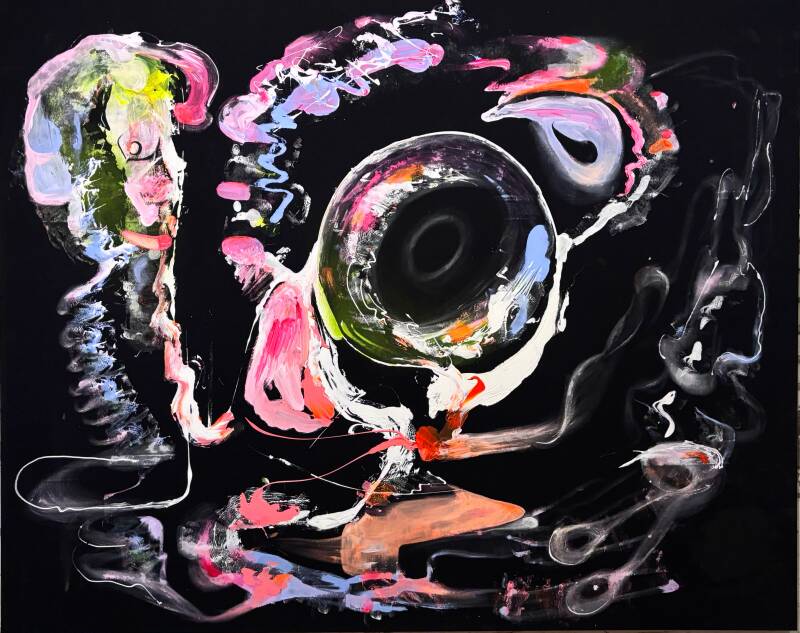
UNACCOUNTED BODY
Acrylic on black canvas
Unaccounted Body addresses the figure as something that resists registration by systems, histories, or moral
narratives. The body appears not as an ideal, symbol, or resolved identity, but as a site of tension where cultural
inheritance, vulnerability, and lived experience collide.
Within a practice that interrogates value through public systems and ritualized gestures, this painting insists on
what remains outside accounting: emotional residue, embodied memory, and forms of presence that cannot
be preserved, auctioned, or redeemed. The work holds the human figure in a state of suspension
—neither heroic nor erased—acknowledging what persists beyond recognition, protection, or control.

MY DICK IS LARGER THAN PICASSO
Acrylic on black canvas
This work confronts artistic masculinity, authorship, and historical dominance through confrontation rather than
critique. Gesture, excess, and aggression are allowed to surface without moral framing. By refusing irony or
redemption, the painting absorbs the unresolved violence embedded in art history’s myths of genius and power.
It destabilizes reverence, exposing how desire, ego, and legacy contaminate value systems from within.
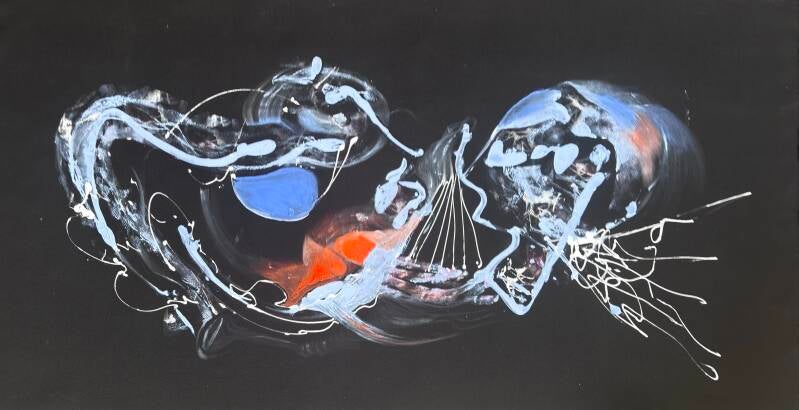
DISTURBED ABSORBED
Acrylic on Black Fabric
This painting holds what cannot be staged or resolved. Gesture accumulates rather than clarifies; movement is suspended,
compressed into the surface. The body appears fragmented, dispersed, and partially erased—yet it remains present.
Within the Black Series, Disturbed Absorbed functions as a site of intake rather than display. It absorbs disturbance, contradiction,
and emotional residue that cannot enter ritual, preservation, or public systems of value. What remains is not narrative, but
pressure—quiet, persistent, and unresolved.
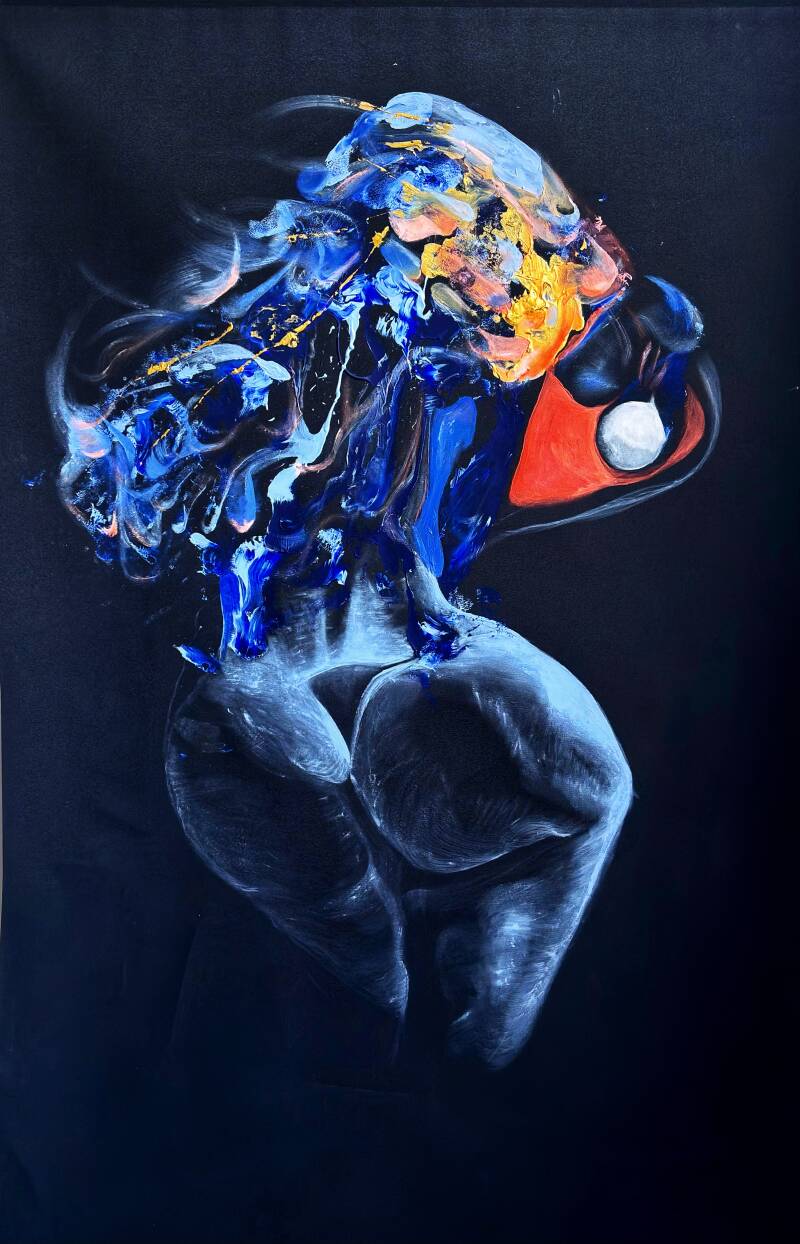
WHAT IS CARRIED, NOT SHOWN
Acrylic on black canvas
The figure is turned away, withholding access while remaining fully present. The exposed back becomes a site of
vulnerability without confession, strength without spectacle. Hair, flesh, and gesture accumulate as weight rather
than ornament. This work insists on embodiment over representation, absorbing what cannot be articulated or
performed. Within the Black Series, it anchors the practice in lived presence—where meaning is carried, not
declared.
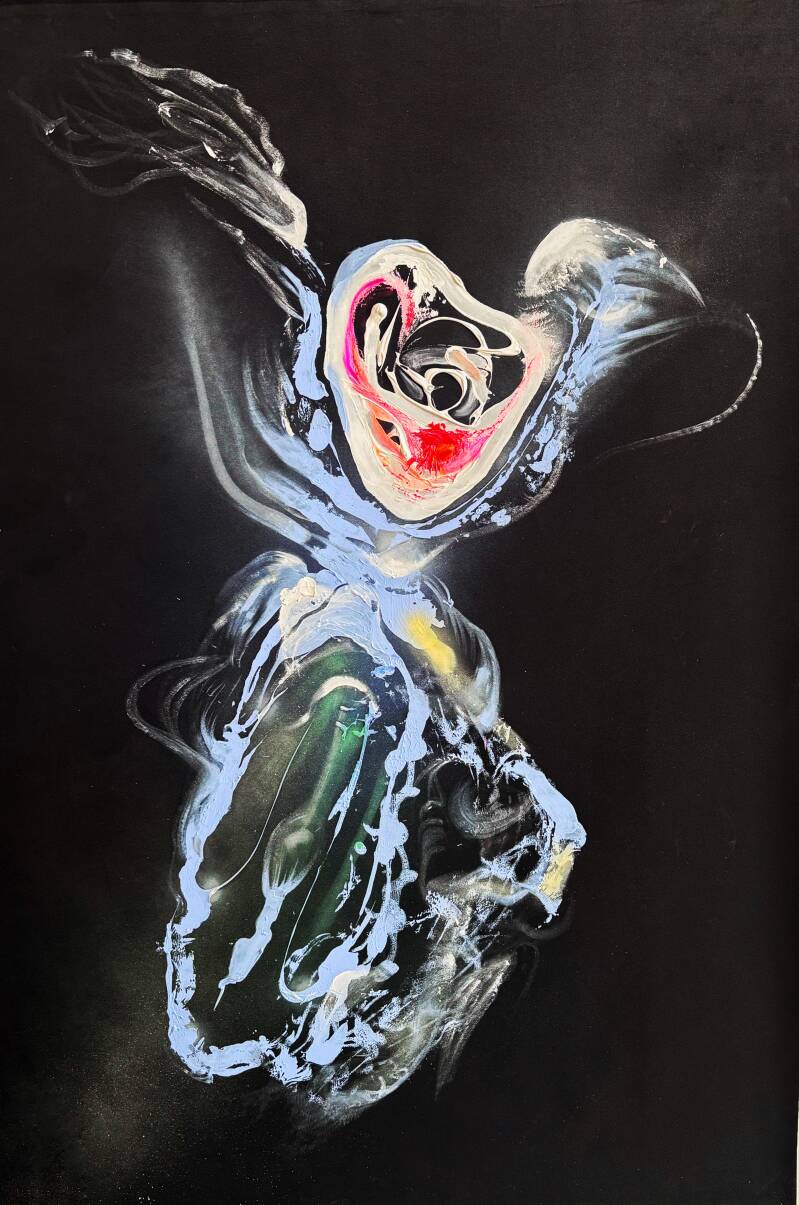
OPENING UNDER PRESSURE
Acrylic on black canvas
Part of the Black Series, this work emerges from a dark field where form appears before it is fully understood. The gesture opens like a body under pressure—unfolding, resisting containment.
Within the series, black operates as a space where the work remains embodied rather than stabilized. Instead of presenting value as something fixed or resolved, the painting holds a moment of transformation—where structure fractures and something raw begins to surface.
The image hovers between presence and dissolution, insisting that what systems attempt to contain always carries an excess that cannot fully be absorbed.
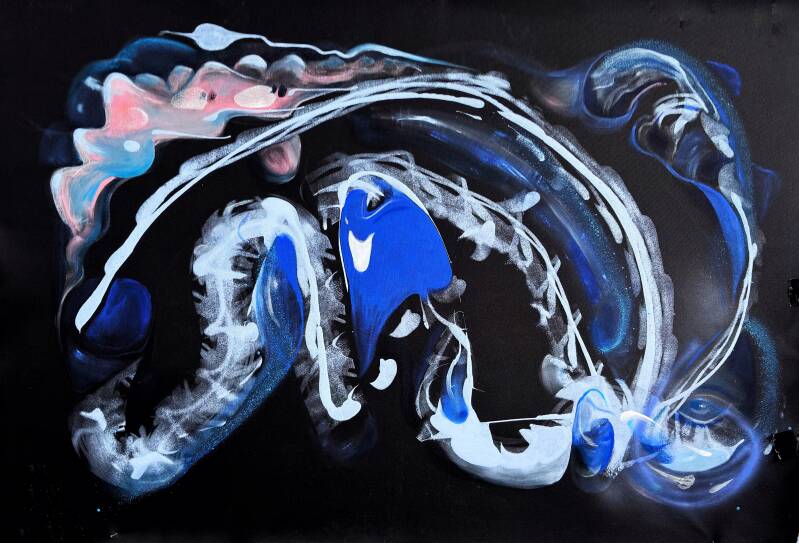
INTERIOR CURRENT
Acrylic on black canvas
This work moves inward. Forms fold in on themselves, tracing a current that runs beneath the body's surface.
The gesture searches rather than resolves, revealing fragments of perception — an eye, a curve, a passage of breath.
Within the Black Series, the dark field holds what cannot easily be stabilized: instinct, tension, memory.
The image emerges from this density and disappears back into it.
The work remains suspended between interior sensation and visible form.
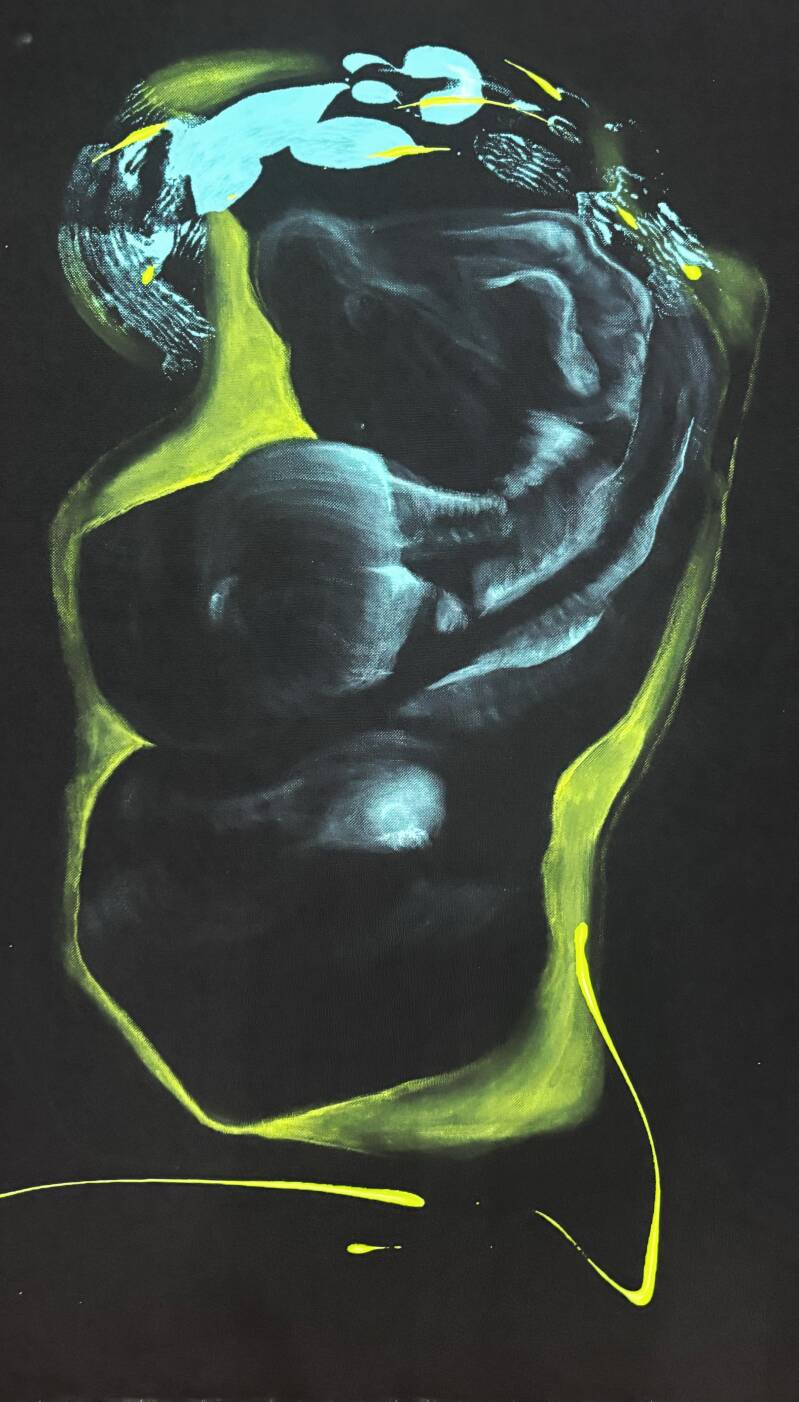
BODY AS VOLTAGE
Acrylic on black canvas
The body does not appear here — it charges. A yellow-green current traces the figure from the outside, outlining what the dark field would otherwise absorb. Light does not illuminate this work from above; it originates from within, pressing outward against the surface.
At the crown, form fragments into cyan — thought, memory, or sensation escaping containment. The torso holds its ground: dense, muscular, and present, refusing to dissolve into the darkness that surrounds it.
Within the Black Series, this painting insists on the body as a source of energy rather than an object of representation.